Blog
What other hydraulic and pneumatic technologies are used in new energy vehicles?
In the rapid development of new energy electric vehicles, many people think that “electrification” means the total elimination of traditional mechanical technology. But in fact, hydraulics and pneumatics still play an irreplaceable role in the key parts of new energy vehicles.
1.Hydraulic brake-by-wire system
While traditional fuel vehicles rely on a vacuum booster pump for their braking system, new energy vehicles turn into a hydraulic brake-by-wire system due to the lack of an engine. This system controls the hydraulic unit through electronic signals to achieve precise braking force distribution.
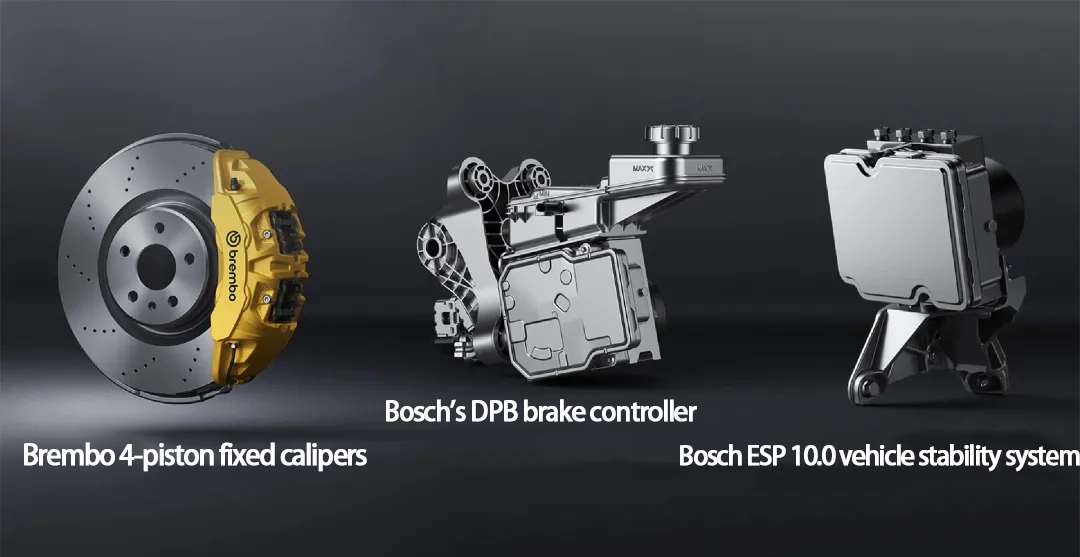
Taking the braking system of Xiaomi SU7 as an example, the most common concern for car owners is the brake caliper. But the real heart of the braking system is hidden under the cab, and Xiaomi SU7 uses Bosch’s DPB (Intelligent Decoupled Braking System) to provide braking pressure on all wheels. In addition, there is ESP 10.0, which is responsible for wheel braking force regulation and pressure control to keep the body stable.
(1)Advantage
fast response, support energy recovery (such as the DPB intelligent decoupling braking system of Xiaomi SU7).
(2)Key components
electro-hydraulic proportional valve, high pressure accumulator, hydraulic pump.
This system still relies on the high-power density of hydraulics during emergency breaking to ensure safety and reliability.
2.Active hydraulic suspension system
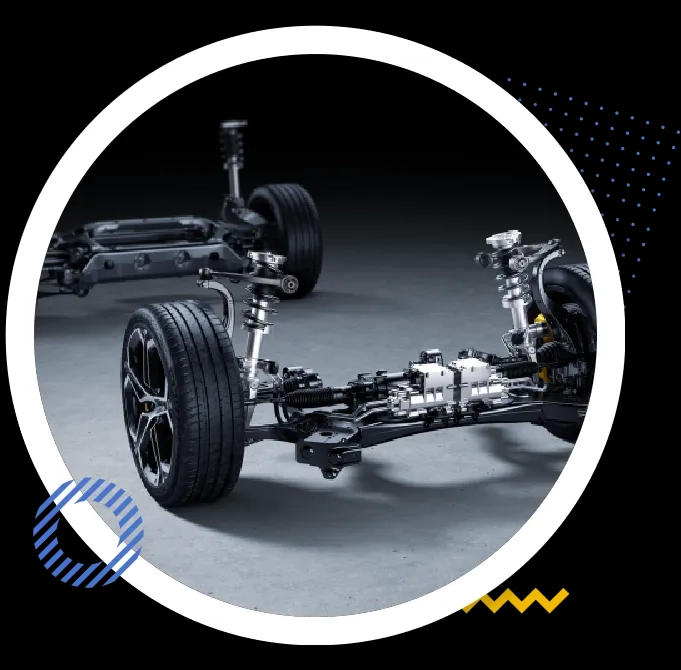
The intelligent suspension of high-end new energy vehicles uses hydraulic actuators to adjust the shock absorber damping and vehicle height in real time.
Control valves: High-speed switching valves or servo valves for millisecond response.
Core function: Improve comfort on bumpy roads, suppress cornering roll, and enhance handling stability.
3. Battery Thermal Management System
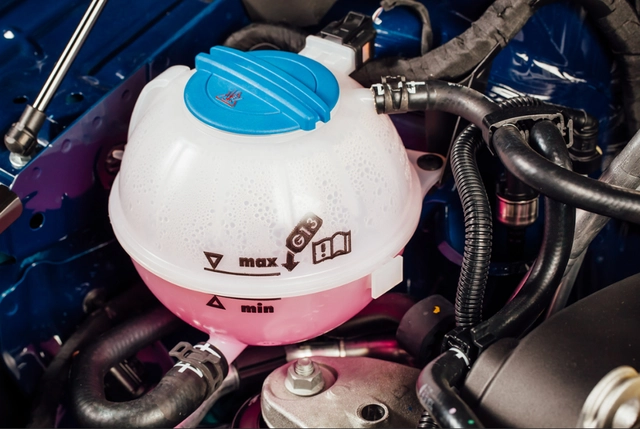
Large-capacity battery packs require efficient cooling. Some models use a hydraulic cooling circuit, which drives the coolant circulation through a hydraulic pump to precisely control the battery temperature.
Advantage: High cooling efficiency, suitable for high load fast charging scenarios.
Key components: mini hydraulic pump, flow control valve.
4.Hydraulic/pneumatic devices for doors and trunks
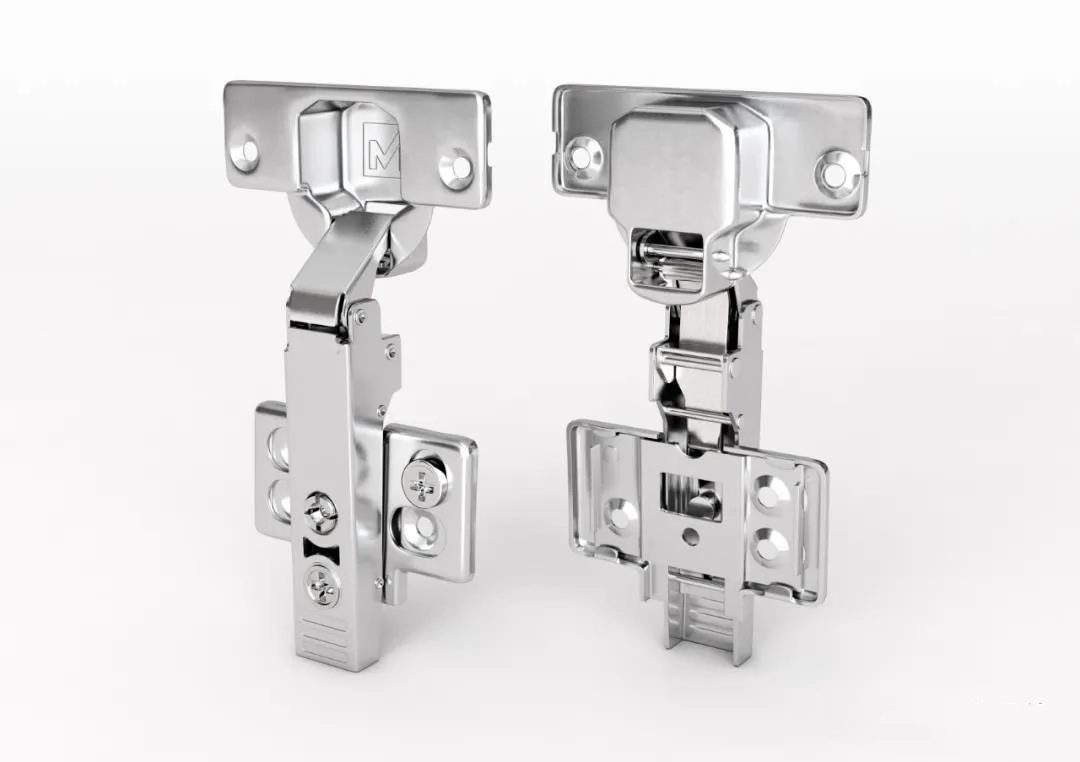
New energy vehicle designs such as frameless doors and electric tailgates often rely on pneumatic spacers or hydraulic actuators to achieve smooth opening and closing.
Case in point: Tesla Model X’s eagle-wing doors use pneumatic hinges to reduce motor load.
5.Which hydraulic technologies are being replaced?
(1) Conventional hydraulic transmissions
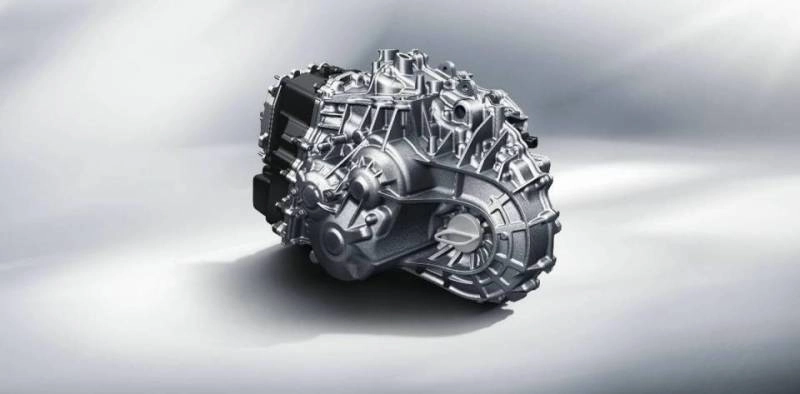
While automatic transmissions (e.g. AT, CVT) in fuel vehicles rely on complex hydraulic control systems, electric vehicles are driven directly by electric motors, with simplified gearing requirements, and hydraulic transmissions are being replaced by single-speed gearboxes.
(2) Hydraulic Power Steering
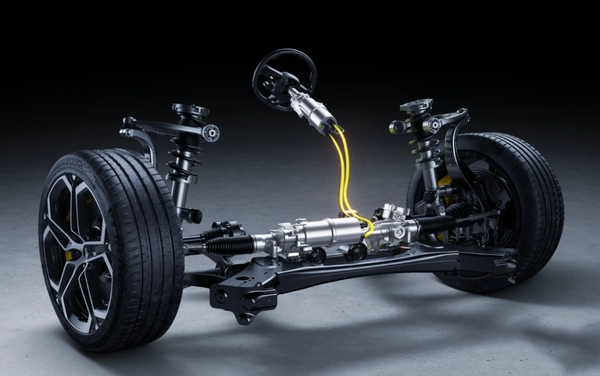
Traditional hydraulic power steering (HPS) is gradually being replaced by electric power steering (EPS), which is more energy-efficient and easy to integrate with autonomous driving functions.
(3) Hydraulic Braking Systems
In the next few years, the hydraulic braking system may also go off stage. Take the Xiaomi 48V four-wheel fully dry electronic braking system (referred to as EMB), it subverts the traditional braking mode, the whole process does not require the involvement of brake fluid, while completely abandoning the traditional hydraulic piping and pump system. This breakthrough design, on the one hand, reduces the potential pollution of the environment, on the other hand, significantly reduces the maintenance burden of the vehicle, the owner of the follow-up maintenance is more relaxed and hassle-free.
6. Future trends: the deep integration of hydraulics and electronics
New energy vehicles are driving the intelligent upgrading of hydraulic technology, for example:
Electro-hydraulic fusion control: optimizing hydraulic response through sensors and AI algorithms.
Lightweight design: using new materials to reduce the weight of hydraulic systems.
Integrated modules: pumps, valves and controllers are integrated into compact units to save space.
Of course, the “electrification” of new energy vehicles is not the end of hydraulics, but an opportunity for its transformation. In key areas such as braking (probably gone), suspension, thermal management, etc., hydraulic technology, with its unique advantages, will continue to be deeply integrated with the electronic system, and become an indispensable “invisible guardian” of intelligent electric vehicles.