


Blog
Analysis and countermeasures of five key factors of compressor exhaust temperature overheating
The main reasons for the compressor exhaust temperature to be too high and overheating are as follows: high return air temperature, large motor heating, high compression ratio, high condensing pressure, and improper refrigerant selection.
1. High return air temperature
The return air temperature is relative to the evaporation temperature. In order to prevent liquid return, the return air pipeline generally requires a return air superheat of 20°C. If the return air pipeline is not well insulated, the superheat will far exceed 20°C. The higher the return air temperature, the higher the cylinder suction temperature and exhaust temperature. For every 1°C increase in return air temperature, the exhaust temperature will increase by 1 to 1.3°C.
2. Motor heating
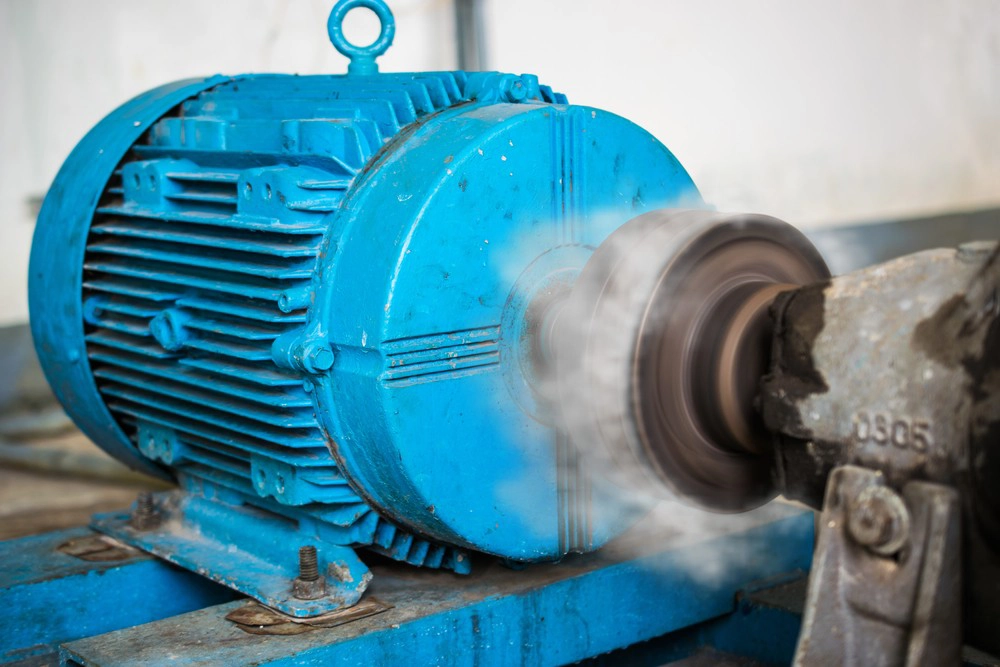
For return air cooling compressors, the refrigerant vapor is heated by the motor when it flows through the motor cavity, and the cylinder suction temperature is increased again. The heat generated by the motor is affected by power and efficiency, while the power consumption is closely related to displacement, volumetric efficiency, working conditions, friction resistance, etc.
3. Compression ratio is too high
The exhaust temperature is greatly affected by the compression ratio. The greater the compression ratio, the higher the exhaust temperature. Specific methods include increasing the suction pressure and reducing the exhaust pressure. The suction pressure is determined by the evaporation pressure and the resistance of the suction line. Increasing the evaporation temperature can effectively increase the suction pressure, quickly reduce the compression ratio, and thus reduce the exhaust temperature.
Some users think that the lower the evaporation temperature, the faster the cooling speed. This idea has many problems. Although lowering the evaporation temperature can increase the freezing temperature difference, the refrigeration capacity of the compressor is reduced, so the freezing speed is not necessarily fast. Moreover, the lower the evaporation temperature, the lower the refrigeration coefficient, while the load increases, the operation time is extended, and the power consumption will increase.
Reducing the resistance of the return airline can also increase the return air pressure. Specific methods include timely replacement of dirty and blocked return air filters and minimizing the length of the evaporator and return air lines. In addition, insufficient refrigerant is also a factor in low suction pressure. Refrigerant should be replenished in time after leakage.
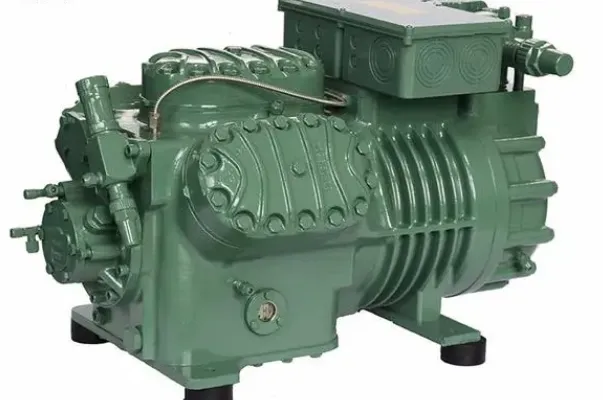
High-temperature and AC compressors are engineered for low compression ratios. However, during refrigeration operation, the ratio surges drastically, resulting in excessive exhaust temperatures that overwhelm cooling capacity. To prevent overheating, compressors must operate within specified limits at the lowest feasible pressure ratio—especially in cryogenic systems, where overheating is the leading failure trigger.
High-temperature and air conditioning compressors are typically designed for operation at low compression ratios. However, when used for refrigeration, the compression ratio rises sharply, leading to excessively high exhaust temperatures that exceed the cooling system’s capacity and result in overheating. To prevent this, the compressor must operate within its specified limits while maintaining the lowest achievable pressure ratio. In certain low-temperature applications, overheating is the most common reason for compressor breakdown.
4. Anti-expansion and gas mixing
After the start of the suction stroke, the high-pressure gas trapped in the cylinder clearance will have an anti-expansion process. After the anti-expansion, the gas pressure returns to the suction pressure, and the energy consumed for compressing this part of the gas is lost in the anti-expansion. The smaller the clearance, the smaller the power consumption caused by the anti-expansion, and the larger the suction volume, so the compressor energy efficiency ratio is greatly increased.
During the anti-expansion process, the gas absorbs heat from the high-temperature surfaces of the valve plate, the top of the piston and the top of the cylinder, so the gas temperature will not drop to the suction temperature at the end of the anti-expansion. After the anti-expansion is over, the real suction process begins. After the gas enters the cylinder, it mixes with the anti-expansion gas on the one hand, and the temperature rises.
On the other hand, the mixed gas absorbs heat from the wall and heats up. Therefore, the gas temperature at the beginning of the compression process is higher than the suction temperature. However, since the anti-expansion process and the suction process are very short, the actual temperature rise is very limited, generally less than 5°C.
Anti-expansion is caused by the cylinder clearance, which is an unavoidable shortcoming of traditional piston compressors. If the gas in the exhaust hole of the valve plate cannot be discharged, there will be anti-expansion.
5. Compression temperature rise and refrigerant type
Due to the differences in thermophysical properties of different refrigerants, the increase in exhaust temperature after the same compression process varies. Therefore, the appropriate refrigerant should be selected according to the refrigeration temperature requirements.
6. Conclusion and suggestions
A compressor that operates normally within the rated operating range should not have overheating phenomena such as excessive motor temperature or excessive exhaust temperature. Compressor overheating is an important fault signal, indicating that there is a serious problem with the refrigeration system or that the compressor is improperly used and maintained.

If the root cause of the compressor overheating problem comes from the refrigeration system itself, it must be solved by optimizing the refrigeration system design and maintenance. Simply replacing a new compressor cannot eliminate the overheating risk from the root. Systemic problems need to be dealt with systematically.


