


Blog
Detailed explanation of the working principle of servo motor and servo drive
In today’s modern industrial automation field, servo motors and servo drives play a pivotal role. With outstanding features such as high precision, high response speed and high reliability, they are widely used in many precision control occasions such as robots, CNC machine tools, and automated production lines, making great contributions to the efficient operation of industrial production and the improvement of product quality.
1. In-depth analysis of the working principle of servo motors
Servo motors are motors that can achieve precise control of rotation angle and speed. Their internal structure is mainly composed of three parts: stator, rotor and encoder.
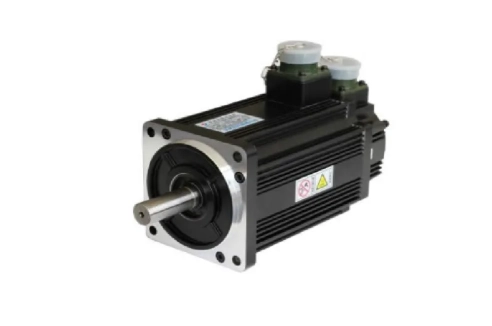
(1) Structure and function of stator
The stator is composed of windings and iron cores. When three-phase alternating current is passed into the windings, a strong rotating magnetic field is generated. The speed of this rotating magnetic field is proportional to the frequency of the power supply and inversely proportional to the number of pole pairs of the motor. It can be said that the stator is like the power source of the servo motor, providing the initial driving force for the operation of the motor.
(2) Composition and operation mechanism of the rotor
There are two types of rotors, one is composed of permanent magnets and the other is wound windings. When the rotating magnetic field generated by the stator acts on the rotor, the rotor will quickly follow the rotating magnetic field to rotate. This is because the magnetic field of the rotor interacts with the magnetic field of the stator, thereby generating electromagnetic torque. This electromagnetic torque is like an invisible force that drives the motor to rotate continuously.
(3) Important functions of encoders
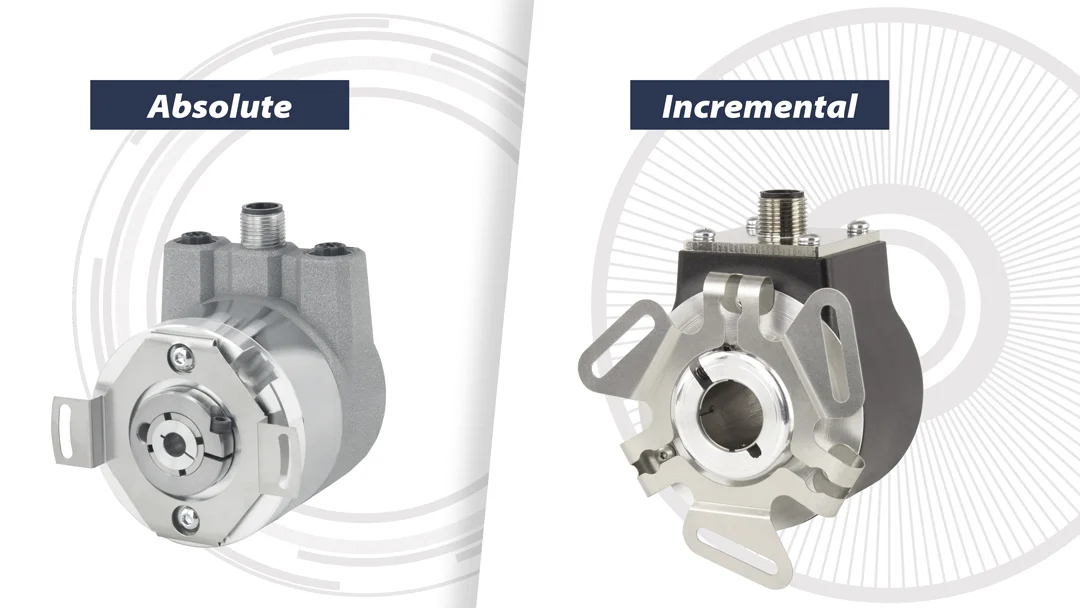
Encoders play a vital role in servo motors. They are mainly used to accurately measure the rotation angle and speed of the motor. Encoders are generally divided into two categories: absolute encoders and incremental encoders. Absolute encoders can directly read the absolute position of the motor and accurately determine the position information of the motor at anytime and anywhere. Incremental encoders calculate the position and speed of the motor by measuring the number of pulses generated when the motor rotates. With the real-time feedback of the encoder, the control accuracy of the servo motor can be greatly improved.
2. Comprehensive interpretation of the working principle of servo drive
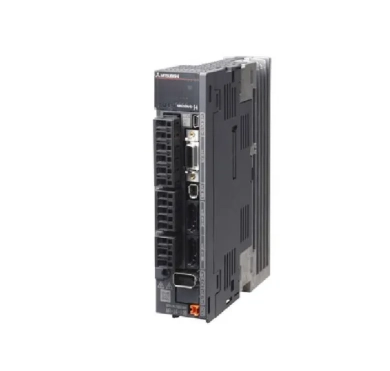
As the core device for controlling servo motors, the working principle of servo drive is complex and sophisticated. It can receive command signals from various controllers, such as PLC, motion controller, etc., and convert these command signals into electrical signals that the motor can understand, thereby achieving precise control of the motor.
(1) Receiving and processing command signals
Servo drives can receive a variety of command signals from different controllers, including position commands, speed commands, and torque commands. After receiving these command signals, the servo drive will immediately process them. First, it will compare the command signal with the actual position, speed, and torque signals of the motor fed back by the encoder in detail to obtain an error signal. This error signal is like a navigator, guiding the servo drive to adjust the motor’s operating state in the right direction.
(2) Signal processing and control strategy
Based on the size and direction of the error signal, the servo drive will use advanced control algorithms to calculate the voltage and current signals that need to be output to the motor. The purpose of these signals is to control the operation of the motor so that the actual position, speed, torque and other parameters of the motor gradually approach the command value. By continuously adjusting the output signal, the servo drive can achieve high-precision control of the motor to ensure that the motor always runs according to the predetermined trajectory and speed.
(3) The key role of power amplification
After signal processing, the servo drive will amplify the calculated voltage and current signals. Power amplification usually uses high-performance power devices such as transistors and IGBTs. These power devices can convert low-voltage, low-current control signals into high-voltage, high-current drive signals, thereby providing powerful power for the servo motor. It can be said that the power amplification link is the bridge between the servo drive and the servo motor. It converts the control signal into actual power output and promotes the efficient operation of the motor.
(4) Comprehensive protection function
The servo drive also has a variety of powerful protection functions, such as overcurrent protection, overvoltage protection, overheating protection, etc. When the motor is abnormal, the servo drive will detect the problem in time with its sensitive detection mechanism and quickly take corresponding protective measures. These protective measures can effectively prevent the motor and drive from being damaged and ensure the safe and stable operation of the entire system.
3. Principle of collaborative working of servo motor and servo drive
(1) Servo motor and servo drive are systems that work closely together. They realize closed-loop control through the signal fed back by the encoder, thus providing a solid guarantee for the high-precision operation of the motor.
(2) In the actual working process, the controller will send precise command signals to the servo drive, and the servo drive will strictly control the operation of the servo motor according to these command signals. At the same time, the encoder will give feedback key information such as the position, speed and torque of the motor to the servo drive in real time. The servo drive will carefully compare the feedback information with the command signal, and continuously adjust the voltage and current signals output to the motor so that the operating state of the motor is always highly consistent with the command requirements. This closed-loop control method can effectively eliminate the influence of various interference factors and ensure the control accuracy and stability of the motor.
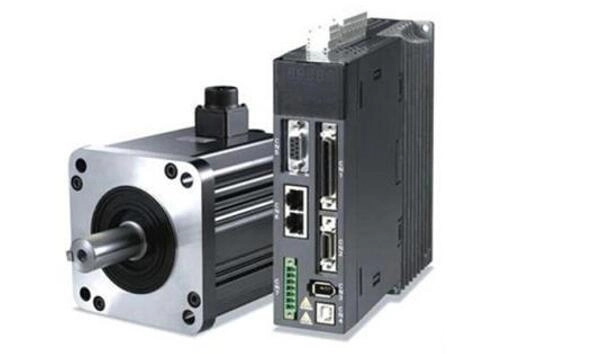
In short, servo motors and servo drive jointly realize high-precision, high-response speed and high-reliability control of motors through their precise control mechanism and efficient feedback system. They play an irreplaceable and important role in the field of modern industrial automation, providing a strong driving force for improving production efficiency, improving product quality and promoting the development of industrial intelligence.


